Latest: Add Latest Article Here | Recommended: Add Recommended Article Here

everything about health and care

Subscribe For Free Latest Updates!

We'll not spam mate! We promise.

Tuesday, May 24, 2016


Chevy with Dr. Nkurikiye and Crispin Gishoma


June 14, 2016


Heart disease, stroke, cancer, diabetes and other chronic diseases are often thought to be public health issues only for high income countries, but in reality 82% of chronic, or noncommunicable, disease deaths occur in low and middle income countries. An increasing number of countries are facing a "double burden of disease" as their health systems are adapt to rapid epidemiological transitions. On this show, you'll hear Dr. John Nkurikiye of the Rwanda International Institute of Ophthalmology and Crispin Gishoma of the Rwanda Diabetes Association in conversation with Chevy Lazenby on the topic of chronic diseases in the Majority World. 

You can listen to this week's show here.
Read More >>

Tuesday, April 26, 2016


Jeanne and Charlotte


April 26, 2016

Twenty-two years after the genocide in Rwanda, we hear from two female survivors who have dedicated their lives to improving the mental health and wellbeing of women in the country's capital. Jeanne Mwiliriza, and Charlotte Karikwera founded Tubahumurize Association in 2006 - a grassroots organization that supports and empowers female victims of violence and marginalization in Rwanda through trauma counselling, vocational training, micro-credit loans, a sewing school and a prodigious cooperative. In this episode, Jeanne and Charlotte discuss their take on the mental health landscape in Rwanda.

To listen to this week's episode, click here
Read More >>

Tuesday, April 19, 2016


http://shivchopra.com/wp-content/uploads/2015/03/shivchopra2.jpg 

This week, Maud interviews Dr. Shiv Chopra, specialist in veterinary medicine and microbiology, widely known as the senior scientific advisor who blew the whistle on the dangers of the bovine growth hormone at Health Canada. Tonight, Dr. Chopra delves into what the TPP really means for Canada, in terms of its food supply, its sovereignty, and the health of Canadians.


Read More >>

Thursday, April 14, 2016


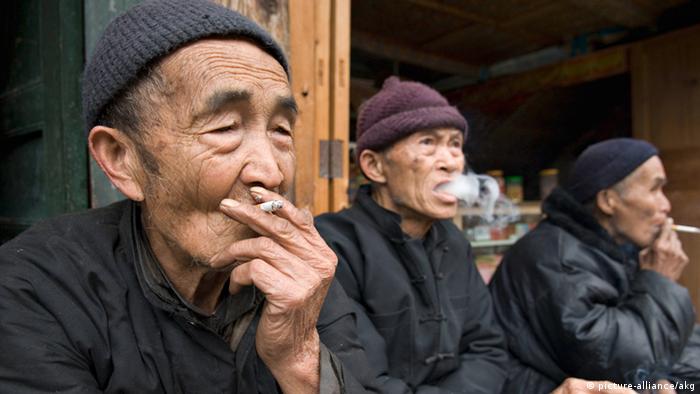
Source: dw.com


April 14, 2016

By Marianne Sibaud

As the world�s largest manufacturer and consumer of tobacco, the prevalence of smoking�as well as its associated mortality and morbidity�is high in China. With more than 300 million smokers (the largest population of smokers in the world) the chronic smoking problem is particularly acute. The fact that China is the world�s largest cigarette market (tobacco taxes make up an important portion of government revenue), combined with a general lack of awareness regarding harmful health effects of smoking, have meant that the tobacco epidemic is forecasted to worsen in the coming decades.
A number of economic and political challenges have hindered the Chinese government�s ability to implement a comprehensive public health policy. With tobacco control low on the domestic-policy agenda, there is a conflict between raising awareness about smoking-related health risks and China�s strong economic image that is largely based on the importance of its tobacco industry. Indeed, as the world�s largest grower, manufacturer, and consumer of tobacco, the Chinese government collects over $67 billion in tobacco taxes per year. While these have been funneled to educational and fiscal support to curb smoking attitudes in western nations, China�s social agenda has yet to support the reduction of tobacco use.
The World Health Organization (WHO) has proposed a number of recommendations to curb China�s smoking epidemic, including health education and heavy taxation. While research has shown that tobacco taxes can be effective in reducing smoking rates, the tobacco industry is so interrelated with the government that an effective tobacco control policy will not be quick to emerge. Smoke-free policies rarely align with those of government agencies and other players (for instance, tobacco policy is led by an economic development agency that consults regularly with the tobacco industry). According to The Economist (2014), the government could further increase the cost of smoking (raised to 11% last year) without losing income - since it controls the monopoly, any lost profits can be made up as tax revenues. However, it is unlikely that a rise in the price of cigarettes would be received well by the smoker population, who are accustomed to low taxed cigarettes (as low as two yuan, or 35 cents, a pack). The influence of the tobacco lobby is also significant. China National Tobacco Corporation has a near-monopoly on tobacco sales in China and between 2000 and 2010, 185 cigarette firms and 1,800 brands were reduced to 30 firms and 133 brands, many of which are now aiming to compete on global markets.
Considering the sluggish progress of the government in implementing a comprehensive tobacco-control policy, smoking will likely continue to pose a formidable challenge to Chinese public health. A recent report concludes that, based on the current rates of smoking, there will be over three million smoking-related deaths by the year 2050.  Given that smoking is a major contributor to chronic obstructive pulmonary disease and lung cancer, both of which are leading causes of death in China, the health burden from tobacco use is daunting.
With current smoking trends set to persist, it can only be hoped that China will consider the economic gains from its colossal tobacco industry to be relatively less important, as the negative health impacts of smoking on the population garner more awareness. It is likely that the economic burden of tobacco-related illness and death, approximated to the tens of billions of dollars, will rise as the economy and the cost of health care grow.


Sources:
Au, William, Su, Daisy & Jiang, Yuan . (2012). Cigarette Smoking in China: public health, science and policy. Reviews on Environmental health. Vol. 27, Issue 1.

Cairny, Paul. (2014). Five Reasons Smoking Rules are Lax. Live Science.

Wakefield, M. A., Durkin, S., Spittal, M. J., Siahpush, M., Scollo, M., Simpson, J. A., Chapman, S., White, V., & Hill, D. (2008). Impact of tobacco control policies and mass media campaigns on monthly adult smoking prevalence. Am J Public Health, 98(8), 1443-1450

Yang, Hammond, Driezen, Fong & Jiang. 2010. Health knowledge and perception of risks among Chinese smokers and non-smokers: findings from the Wave ITC China Survey.Tobacco Control.

Zhang, Jing, Ou, Jia-Xian & Bai, Chun-Xue. (2011). Tobacco smoking in China: Prevalence, disease burden, challenges and future strategies. Respirology Vol. 16, Issue 8. N.a.

(2015). �One in three young Chinese men will die from smoking�. BBC.

(2014). �Government Coughers�. The Economist.

Read More >>

Monday, April 11, 2016


Photo from huffintonpost.ca

April 12 2016

As 25 000 Syrian refugees settle in Canada, healthcare professionals are called to prepare for care for this vulnerable population.

This week's show focuses on Dr. Tony Barozzoni and Dr. Ghayda Hassan, who were the experts that spoke at the Caring for Refugee Children Webinar from the Government of Canada Teleconferencing Service (April 4, 2016). Specifically, they talked about CKNC as an useful web resource for health practitioners and migrant workers as well as the importance of providing culturally-sensitive support.

Produced by Alice Shen.

To listen to the full show, please click here.
Read More >>

Monday, April 4, 2016


April 5 2016

This week features a discussion panel with Chlo� Pierret, Alexis du Fayet de la Tour, and Rachel Chan on their experience with Montreal World Health Organisation Simulation (MonWHO) - a conference that focus on global health issues and policies. While Rachel shares her role being part of the organiser for MonWHO, Chlo� and Alexis express different encounters as the Lebanese and German delegate respectively. They also recount difficulties or challenges faced during the conference which themed was on non-communicable disease discussion. 

To listen more about this episode on MonWHO, produced by Rachel Chan, click here!
Read More >>

Tuesday, March 22, 2016


Illustration by Mark Twain


March 22, 2016

In this episode we will hear from the One More Drink: the Societal and Health Costs of Alcohol event, which was a presentation held at McGill University on March 15. The event looked at prevalence data and healthcare costs of alcohol consumption, factors affecting consumption and related harms, and positive societal actions and public health interventions.

The first clip features Professor Sylvia Kairouz, Director of the Lifestyle and Addiction Research Lab. Listen to hear why alcohol is a public health problem and proposed solutions from a public health perspective.

The second clip presents Dr. Louise Nadeau, Professor in the Department of Psychology at the University of Montreal and Associate Researcher at the Douglas Mental Health University Institute. Dr. Nadeau elaborates on alcohol pathology, emphasizes the neurological (and NOT moral) basis of problematic drinking, and presents tools for clinician to address pathological drinking.

To listen to this week's show, click here.

To listen to part two of the event, click here.
Read More >>

Tuesday, March 15, 2016


Source: vitals.lifehacker.com


March 15, 2016

In this week's show, Rafiya and Viv return to the topic of the Zika virus. We discuss the properties and history of the virus, the way the mainstream media has been covering the virus, and how economic inequality feeds the cycle of epidemics. We also give an update on recent findings about the microencephaly attributed to Zika.

To listen to this week's show, click here.
Read More >>

Tuesday, March 8, 2016


Danielle Denichaud cooking for a class

March 8 2016

This week, Maud from Health on Earth interviews Danielle Denichaud, holistic nutritional and wellness consultant, functional trainer, and yoga teacher. Through recounting her own journey from illness to health, Danielle explains how holistic nutrition is a powerful field of wellness and care, and has an important role to play in disease prevention and improving our overall wellbeing. For more information, you may contact her at d.denichaud@gmail.com.

To listen to this week's show, click here!


Read More >>

Monday, February 29, 2016


Image source: coachorg.com


March 1 2016

This week's show is the second half of our journey into telemedicine. Episode one has been broadcasted on February 2nd for those want a refresher. Hope I kept you all interested in exploring more about telemedicine and Paige's research project. It is now time to share the fascinating results and future directions of her project. Then, we will get to know her on a deeper, a little more personal level. Let's start where we left off!

Outer space is vast and some parts are still unreachable by humans. But here back on soil, there are those in rural areas and in the North, who should not be unreachable. We once thought humans could not reach the moon, but with space technology we met our goal. The progress of telemedicine and Paige's project will extend health care and bring service to many more children in Canada. Once again, a huge thank you to Paige Dean, our wonderful student expert and my partner Eric for holding my way through the dark. 

Produced by Kaylee Sohng.

You can listen to this week's show here.
Read More >>

Sunday, February 28, 2016


January 19 2016

This week Rafiya spoke with Professor Tom Fronds, professor of Aerospace Medicine at the Baylor Institute of Aerospace Medicine, Houston. Dr. Tom Fronds' research focuses on the long term cognitive effects of zero gravity on the brain. His research group studies a phenomena called microemolization, that occurs in the brain's small vessels when an astronaut is exposed to zero-gravity. These microemboli can cause small, unnoticeable infarctions in the brain's vasculature over long periods of time. Dr. Fronds discusses the implications of this on the future possibility of long-distance space travel.

To listen to this week's show, click here!


Read More >>

Monday, February 22, 2016


Image source: ckut.ca


February 23 2016

This week features a special presentation of the 14th Annual Homelessness Marathon, all the way from CIVL in Abbotsford BC.

Inspired by the same event begun in New York City in 1997 (based in Washington, DC this year), CKUT-FM at McGill in Montreal hosted the marathon for 11 years before CjSR Edmonton at the University of Alberta, CFRC Kingston at Queens University, and now CIVL from UFV in Abbotsford, all stepped up to pitch in and do the heavy lifting. CKUT staff and volunteers still dedicate valuable resources by both assisting in the coordination of the broadcast and contributing content of their own, as well as engage their local community to get involved!

(Re-posted from ckut.ca)

You can listen to a part of the annual Homelessness Marathon programming, hosted by Native Solidarity News and Nipivut, here!
Read More >>

Tuesday, February 16, 2016


Source
February 16 2016

This week Viv and Alice spoke with Sierra Clark, a student in the MSc Epidemiology program at McGill. We discussed what indoor air pollution is, why it largely affects women and children, and its large burden on health around the world. Sierra told us about an exciting new cookstove that is currently being tested in Sichuan province in China as an intervention to reduce indoor air pollution.

To listen to this week's show, click here!


Read More >>

Monday, February 1, 2016


Image source: leadingage.org


February 2 2016

Did you know the NASA used the same digital signal processing to enhance pictures from Apollo Lunar landing as do hospitals to enhance pictures of your broken bone?

Did you know that NASA used to measure temperature of planets and starts with the same technology as the thermometer you put in your ear to check for a fever?

Did you know that NASA told satellites how to work with the same technology that keeps patients' heart beating by sending little bits of electricity to their hearts?

Did you know that NASA uses the same lasers to study ozone layer around the Earth as do physicians do to unclog blood vessels?

This is Kaylee Sohng from Montreal. There's a reason I'm starting out with a grand escape to the space. It's because NASA also pioneered a technology that is rapidly being developed in medicine that I'll talk about today, and it's telemedicine.

In 1972, NASA partnered with the Indian Health Service in the US to provide healthcare to a remote tribe of Native Americans on the Papago Reservation in Arizona.. The Papago tribe was very isolated. So they used two-way microwave transmissions to link paramedical personnel located in mobile vans and fixed stations with medical experts at hospitals in Tucson and Phoenix. 

Today, with our country being the 2nd largest in the world, the vastness of our land has posed a great challenge to residents without appropriate access to health care in rural areas. So I spoke with a student at University of British Columbia, Paige Dean. She will explain the definition and significance of telehealth and inform us about her research project over the summer of 2015.

You can listen to this week's show here
Read More >>

Tuesday, January 5, 2016


January 5 2016


Tonight, Health On Earth's Lorraine interviewed Dr. C�cile Aptel and Dr. Doris Schopper on the issue of sexual violence in armed conflict. Dr. C�cile Aptel, Senior Legal Policy Adviser at the Office of the High Commissioner for Human Rights, discussed about the legal aspects and progress of the issue. While Dr. Doris Schopper, Director of the Centre for Education and Research in Humanitarian Action and member of the ICRC Assembly, elaborated on the prevalence and health consequences of victims.

To listen to this week's show, click here!
Read More >>

Tuesday, December 8, 2015


December 8 2015

This week Viv spoke with Emily Yung, who is the Mental Health Education Coordinator at McGill University. The discussed the process of conceptualizing the McGill Mental Health Hub, which is an online platform that includes resources and a diagnostic tool for mental wellness. Emily elaborated on the development of the MHH's mission, which is to connect the university community to information and supports for mental well-being. Emily spoke about the project's current and past challenges, its' next steps, and other aspects of her role as Mental Health Education Coordinator.

To listen to this week's show, click here!
Read More >>

Tuesday, November 17, 2015


From Scarleteen

November 17 2015

In this week's show, Viv had the chance to speak with Sonia Osorio about fertility awareness as a natural form of birth control, and more broadly about holistic health and homeopathy.

Sonia Osorio has a Master�s level training in homeopathic medicine (DHom), and is a registered massage therapist (RMT) and a certified yoga instructor (CYT) with almost 20 years experience in somatic bodywork and meditation. She has worked as a writer and editor in medical publishing, and continues to contribute articles to various health care publications. She has also helped develop and facilitate teaching curriculums for various mind-body training programs. Sonia works with individuals in areas related to mental health, physical and emotional trauma, addiction, women�s health, and gender issues. Her commitment is to support balance and well-being in all areas of one�s life by meeting people where they are, as they are. To find out more about Sonia and her work, visit her website.

To hear details about fertility awareness method and how it can bring greater understanding about our bodies and sexualities, and about holistic health and homeopathy, click here.
Read More >>

Tuesday, November 10, 2015


From the McGill Institute for Global Food Security
November 10 2015

This week, on Health on Earth, we continued our coverage of the 8th Global Food Security Conference. The show focuses on several issues concerning rural agricultural development: gender parity and the emergence of information technology. As part of the show, an interview with Santiago Alba-Corral Senior Director if International Development at CARE Canada was aired featuring the different goals and strategies of CARE International in agricultural development. Additionally, one of the student panelists, David Chen, joined us for an in studio interview on his research about food security in the Arctic. On a final note, we could like to thank the organisers of the Global Food Security Conference, especially Kim Reany for assisting with the coverage of this event!

To listen to this show, click here.


Read More >>

Tuesday, November 3, 2015


November 3 2015

This show is a recap of the lecture Poverty and the Brain offered by the Ludmer Centre for Neuroinformatics and Mental Health.

1 in 7 (or about 4.8 million) people in Canada live in Poverty. And Poverty, by itself, costs Canada as a whole between 72 billion and 84 billion dollars annually. Poverty is highly socially constructed. In Canada, 21% of single mothers live in poverty while raising their children, and people living with disability is twice as likely to live below the poverty line.


Poverty and the Brain, by the keynote speaker Dr. Michael Meaney, talks about how exactly is poverty correlated and an important factor that leads to poorer health outcomes from a biological perspective. Specifically, he outlines studies that show poverty is a key condition that can cause physiological adaptations in the brain. Dr. Meaney is the co-director and a primary investigator at the Ludmer Centre, a researcher at the Douglas Mental Health University Institute, and a James McGill Professor of psychiatry, neurology and neurosurgery.

Produced by Alice Shen.

Listen to the full show here.
Read More >>

Tuesday, October 27, 2015


Lowan, President Nwanze, and Viv at the CKUT Studio


October 27 2015

This week on Health on Earth, we heard from Dr. Kanayo Nwanze, President of the International Fund for Agricultural Development. Lowan and President Nwanze spoke about developing rural agriculture through empowering farmers with entrepreneurial skills-building and facilitating access to markets. We also heard about supporting indigenous approaches to agriculture, about the Millennium Development Goals and about the Sustainable Development Goals. Dr. Nwanze also showed us how food agricultural development and food security have implications for migration and political unrest, and for climate change. Dr. Nwanze also shared his insights on leadership and advocacy for sustainable agricultural development. This show was part of our annual coverage of the McGill Global Food Security Conference.

To listen to this show, click here.

Our annual funding drive is happening this week! To donate visit ckut.ca/donate.
Read More >>

Tuesday, October 20, 2015


Guy Giard (right) and Patch Adams (left), courtesy of Guy's Facebook page


October 20 2015


Laughter is the best medicine! Join Viv as she interviews Guy Giard, a teacher and member of an international group of clowns who has traveled to Peru, Guatemala, India and more to share the healing power of humor. Guy explains the clowning philosophy, the science behind laughter and humor, as well as his best stories and moving moments from abroad. What are his seven steps to a happier and fulfilling life? Find out here!


Read More >>

Tuesday, October 13, 2015


Via Action Canada for Sexual Health and Rights


October 13 2015

This week's show covered current events relating to health in Montreal, and around the world.

We shared Dr. Joanne Liu's statement on the Kunduz attacks on a M�decins sans fronti�res hospital, with additional follow-up coverage from MSF. You can find out more and offer your support via #IndependentInvestigation.

Pertaining to the Canadian federal election on October 19th, we also covered leaders' positions on several sexual and reproductive rights' issues, via the Up for Debate campaign. You can watch the original interviews here. If you're looking for more info you can also check out this handy thematic guide from Action Canada for Sexual Health and Rights. Don't forget to cast your vote on October 19th!

We also shared some more information about Bill 20, which affects how physicians work in the province of Quebec and access to fertility treatments, among other healthcare-related issues. Find out more here.

On October 10th it was World Mental Health Day, so we shared this letter on global mental health, written by McGill researchers, with our listeners.

You can listen to our show here.


Read More >>

Tuesday, October 6, 2015


Banner image from Students in Mind 2015


October 6 2015

Students in Mind is an annual mental health conference that takes place at McGill University. Organized by students of McGill, the third installment of the conference took place on October 4, 2015 to open up a positive conversation about mental health on campus. Recognizing that students' mental health initiatives, such as the Students in Mind conference, have made visible impacts in reducing mental health stigma over the last couple of years at McGill, Health on Earth's Alice interviewed this year's Conference Chair, Danny Jomaa, about his organizing experience for the conference and his views on mental health.

You can listen to the full interview here!

Read More >>

Tuesday, September 29, 2015


REINVENT Conference on Neglected Diseases logo - from their website


September 29 2015

This week we spoke with Abtin, an organizer from the REINVENT Conference on Neglected Diseases about deconstructing the "tropical" in neglected tropical diseases, about the goals of the conference and about social, economic and political forces that lead to neglect in healthcare and health inequities.

Viv also gave a summary of Dr. Madhukar Pai's talk entitled "Can We Save Open Access Publishing?"

To listen to this week's show, click here.

Read More >>

Tuesday, September 22, 2015


Image credit: pittsburghmagazine.com


September 22 2015

We may have heard about psychoanalysis, which stems from the outpatient practice of clinical medicine, specifically of clinical neurology, and discovered by the Austrian neurologist Sigmund Freud. This practice attempts to explore the unconscious human mind through physician-patient interactions. Since the Second World War, psychoanalysis has become common. With modern psychiatry is flooded with medication-based advances, such as Prozac and SSRi, there seems to be a distinguishable gap between the biological and psychological psychiatry - or the focus of the brain versus the mind. 

This show tries to explore this topic with an interview with Dr. Reid, a London-based psychiatrist, who provides psychodynamic psychotherapy. 

You can listen to the show here!

We also encourage you to read this article, published in 2010 by Dr.Shedler, and it illustrates the efficacy of psychodynamic psychotherapy with scientific evidences. 
Read More >>

Tuesday, September 15, 2015


From lonemind.com


September 8 & 15 2015

Neuromodulation is a kind of therapy using technology to treat the nervous system directly to manage symptoms and treat nerves. Dr. Michel Prud'Homme, a neurosurgeon at l'H�pital de l'Enfant-J�sus in Qu�bec and President of the Canadian Neuromodulation Society, spoke to us about the 12th World Congress on Neuromodulation, about access to these technologies in Canada, and about new advances in this interdisciplinary field, and about his own research. Dr. Tim Deer, an anaesthesiologist and President of the International Neuromodulation Society also joined us from Virginia and spoke about leadership in medicine, interdisciplinary teamwork and his research on neuromodulation.

You can listen to part 1 and part 2 of this series here.
Read More >>

Tuesday, September 1, 2015


Photo by Jacques Boissinot / The Canadian Press (Source)


September 1 2015

Tonight, Health On Earth's Viv and Alice take us to the heart of the debate over Bill 20, a controversial law proposed by Ga�tan Barrette (Minister of Health and Social Services of Quebec) that would bring big change for family physicians in Quebec. Join a somewhat heated discussion between Gaetan Barrette and McGill medical school students concerning the substance and passage of the Bill. One student highlights concerns over the complete lack of consultation with physicians in the creation of the legislation. How did M. Barrette answer? Click here to listen to the show.  


Read More >>

Tuesday, August 18, 2015


From Time to Change


August 18 2015

Harmful stigma and misperceptions about mental illness are among the biggest challenges in bringing mental health programs into communities; often resulting in social restrictions, delay in treatment and low self-esteem.

This week, Alice talks about an expert panel on Addressing Mental Health Stigma, hosted at GHD Online in May 2015, exploring the programs that address these challenges and successful mental health educational efforts that have been applied to different settings and diverse populations, such as Haiti and China.

Panelists included Helen Christensen, PhD (Chief Scientist and Director of the Black Dog Institute), Samuel Law, MD, FRCP(C) (Assistant Professor of Psychiatry at the University of Toronto) and Rupinder Legha, MD (Psychiatrist/Pagenel Fellow at Zanmi Lasante and Partners in Health; Research Fellow in Global Health and Social Medicine, Harvard Medical School).
Read More >>

Monday, August 10, 2015


Photo by Dr.Farouk


August 11 2015


Tonight Alice was joined live in the studio by Rahab Wali, a science graduate from McGill who is currently attending medical school in Ireland. Rahab explained the workings of the Irish medical school curriculum and shared her thoughts on cultural differences in the perception of medical education and medicine in Pakistan, Abu Dhabi, Ireland and Canada. To learn more about medical school applications, life in Ireland, and the hard road back to Canada, listen here.
Read More >>

Tuesday, August 4, 2015


From Uranium2015.com


August 4 2015

Tonight Viv and Alice were joined live in the studio by Dr. Juan Carlos Chirgwin, a physician affiliated with McGill University and president of Physicians for Global Survival to speak about his experiences at the World Uranium Symposium from April 14 - 16. We heard about the Symposium about the effects of uranium mining, nuclear war and nuclear disasters on health, and about why "prevention is the only cure".

To listen to this week's fascinating show, click here.


Read More >>


Copyright © 2016 - health is wealth - All Rights Reserved
(Articles Cannot Be Reproduced Without Author Permission.)
Design By : | Powered By: Blogger